

Balanced Breath
Explore Sama Vritti, or Balanced Breath… a gentle breath practice that welcomes you back to center. Whether you are feeling scattered, unsettled, overstimulated, depleted, or simply curious, this practice offers a way to return to presence, rhythm, and steadiness.
Balanced Breath offers a simple place to begin.
By introducing a gentle and even rhythm, the practice can help gather attention, steady the breath, and create conditions that support greater ease.
What Is Balanced Breath?
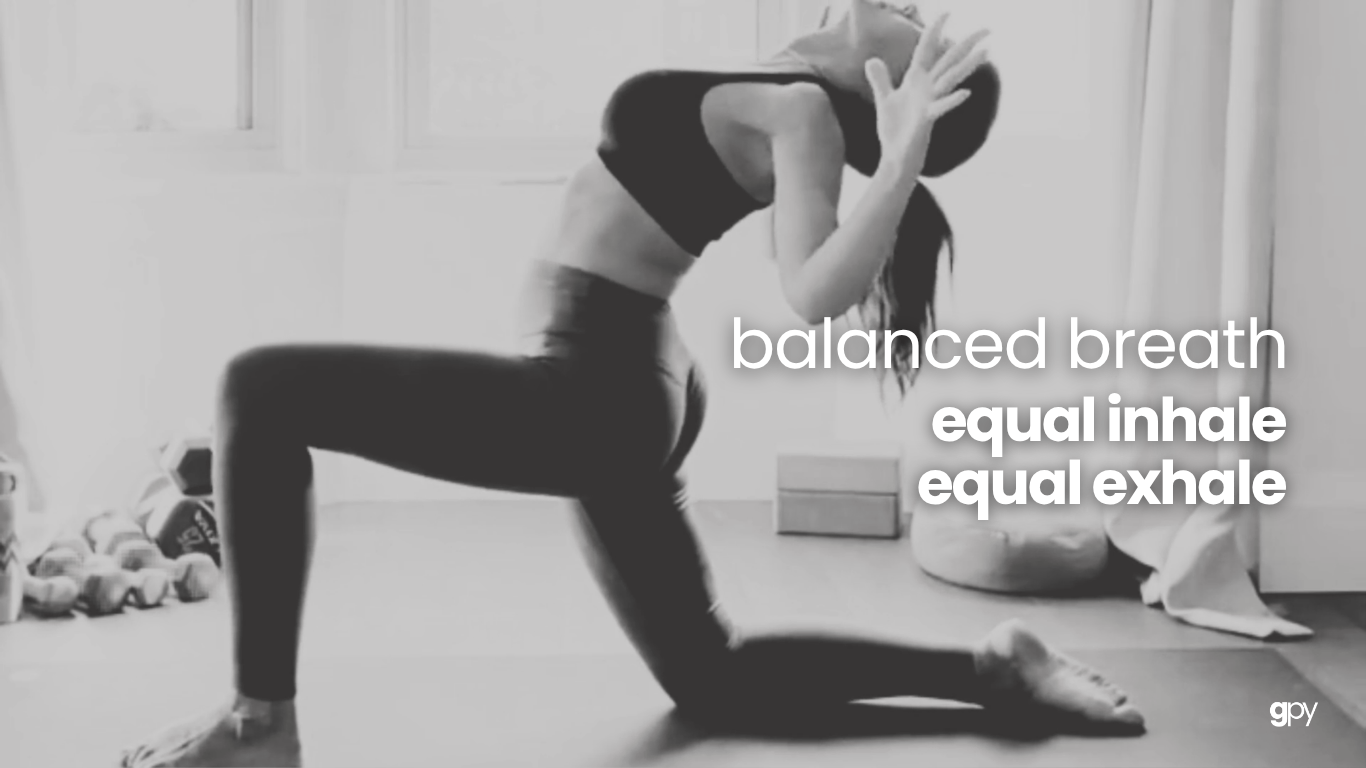
Balanced Breath is a breathing practice in which the inhale and exhale gradually move toward equal duration. In Sanskrit, it is known as sama vrtti: sama means equal, even, or balanced, while vṛtti can refer to a movement, pattern, or fluctuation.
For example, if you inhale comfortably for a count of three… you exhale for the same count. The number isn’t important. What matters is choosing a rhythm that allows the breath to remain smooth, quiet, and free from strain.
Counting also gives us a simple focal point to follow. When attention drifts, using the breath as an anchor can help us return to the practice.
What Are You Practicing?
On the surface, you are practicing an inhale and exhale of equal duration. More deeply, you’re learning how to remain in relationship with the breath.
You may begin to notice:
whether the inhale or exhale feels easier
where effort or holding appears
when attention wanders
how the body responds to a steady rhythm
whether the count continues to feel comfortable
Balanced Breath isn’t about controlling the breath until it obeys an ideal pattern or to produce the longest breath possible. You are introducing a gentle structure and observing how the body, breath, mind, energy, and attention meet it.
Who May Benefit?
Balanced Breath may be supportive when you are experiencing scattered attention, racing thoughts, mild stress, restlessness, or a sense of internal urgency.
It can also help when you are transitioning from activity into rest or gathering yourself before meditation, reflection, focused work, or sleep.
With consistent and comfortable practice, Balanced Breath may:
support a steadier breathing rhythm
strengthen awareness of the breath
give wandering attention a repeatable anchor
reduce the felt sense of hurry
support focus and attentional stability
help the body settle without demanding that it become calm
reveal patterns of tension, effort, or unevenness
make the transition into meditation or rest easier
These are possibilities, not requirements. You may notice a clear change, a subtle shift, or no immediate change at all.
Calmness is Not a Requirement
Balanced Breath isn’t about forcing yourself to feel calm or replacing your current state with a more desirable one. The practice begins by helping you notice how you are breathing and how you are meeting the moment now.
But noticing isn’t passive.
As you slow down, support the body, soften unnecessary effort, and allow attention to remain with the breath, the conditions of the practice may begin to change.
The breath may become quieter.
The body may feel more comfortable.
Attention may become less scattered.
Conscious participation is difficult when the body feels overwhelmed or attention is continually being pulled away. Sometimes we begin by noticing our state and sometimes the practice also helps us become steady enough to meet it.
Beginning the Practice
Choose a place where you can give the breath your attention without needing to monitor your surroundings.
Sit in a comfortable, supported position, or lie down if that allows the body to settle more easily.
Before introducing a count, notice several natural breaths.
Then choose an easy rhythm, such as:
Inhale for three.
Exhale for three.
Allow the jaw, throat, shoulders, and abdomen to soften.
If it feels helpful, place a hand on the abdomen or ribs so you can feel the movement of the breath.
Remain with the count only while it feels comfortable. If the breath becomes strained, shorten the count or return to breathing naturally.
Try practicing for two to five minutes to begin.
After the guided practice, release the count and take one natural breath. Notice whether anything has changed in the breath, the body, or the quality of your attention… even if the shift is subtle.
I enjoy concluding my breathing or meditation sessions with a brief reflection in my journal.
When to Practice
You may use Balanced Breath before meditation, after extended screen time, before focused work, during an evening wind-down, or whenever you want to gather your attention before responding.
Practicing Safely
Do not practice while driving, operating machinery, walking near traffic, or in any situation that requires your full external attention.
Release the count and return to natural breathing if you experience dizziness, lightheadedness, breathlessness, pain, panic, or unusual discomfort.
If focusing on the breath increases distress, move your attention to something more stabilizing, such as the feeling of your feet on the floor, the support beneath your body, or an object in your surroundings.
If you have a respiratory, cardiovascular, or other medical condition that affects your breathing, consult a qualified healthcare professional before beginning a structured breathing practice.
Balanced Breath shouldn’t require force or breath retention.
Comfort takes priority over maintaining the count.
The Practice Beneath the Practice
The breath is both something you can observe and something you can gently influence. It offers feedback about your current state while also giving you a way to participate in how that state is being met.
The even rhythm creates continuity: inhale, exhale, return. Each time attention wanders and comes back, you’re not failing at the practice.
Returning is part of the practice.
Over time, you aren’t only learning to balance the duration of the breath, but practicing how to notice, adjust, and remain.
You don’t need to become perfectly calm. Through awareness, rhythm, and a willingness to adjust, you can begin consciously participating in the conditions from which you meet your life.
Slow down. Gather yourself. Return to what is true.